
Korean Barrier Creams: What Americans Buy in Seoul
I grew up with Madecassol — the small green tube my mom kept in the drawer for scraped knees. Most Korean households have one. So it surprised me, the first time I saw a U.S. client of ours walk out of a pharmacy store with a Madeca Cream in her bag. Same active I'd used as a kid, in a skincare jar.
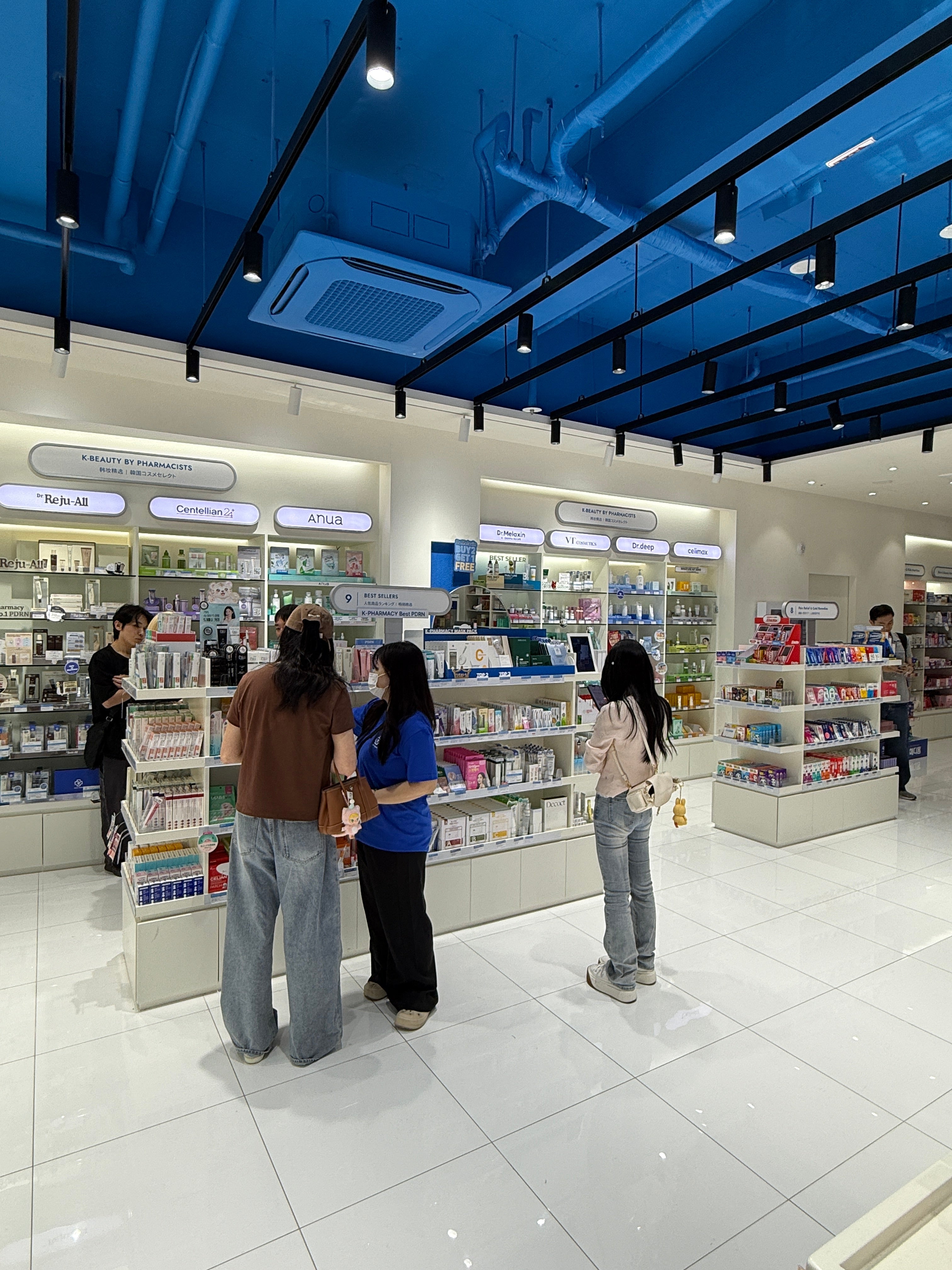
It hasn't been a one-off. Most of our U.S. clients come to Korea for a dermatology treatment and a health checkup, and skincare shopping is almost always part of the trip. For years that meant Olive Young. Over the past year, I've watched more of them leave with bags from the pharmacy instead — or with products that share a shelf with prescription-grade brands. Pharmacy skincare here has quietly evolved. Korean barrier creams are at the center of it.

Madecassol — Korea's standard wound-healing ointment since 1970, made by Dongkook Pharmaceutical. Its active ingredient (TECA, a medical-grade Centella extract) is the same molecule Dongkook brought into skincare in 2015 as Centellian24's Madeca Cream.
Barrier Cream vs. Moisturizer
Before the products, the basic distinction. Barrier creams and moisturizers feel similar but do different things.
| Feature | Cosmetic Moisturizer | Dermatology-Based Barrier Cream |
|---|---|---|
| Primary Goal | Temporary hydration and surface smoothing | Structural repair of the stratum corneum |
| Core Mechanism | Humectancy and surface occlusion | Physiological lipid replacement (3:1:1 ratio) |
| Key Ingredients | Glycerin, Squalane, Plant Oils | Ceramides, Cholesterol, PDRN, TECA |
| Post-Procedure Use | Not recommended for trauma recovery | Essential for post-laser and injection healing |
| Regulatory Status | General Cosmetic | Often Pharmacy-only or Hospital-exclusive in Korea |
A moisturizer is a comfort product. A barrier cream is closer to a clinical tool — it rebuilds the stratum corneum using physiological ratios of ceramides, cholesterol, and fatty acids. That's why dermatologists and surgeons here recommend them after procedures, when the barrier has been deliberately disrupted.
The best Korean barrier creams

Ready Young Pharmacy, Gangnam Station — May 2026
Centellian24 Madeca Cream
Madeca Cream is made by Dongkook Pharmaceutical — the same company that's produced Madecassol, Korea's standard wound-healing ointment, since 1970. The active is TECA (Titrated Extract of Centella Asiatica), a medical-grade Centella derivative Dongkook has refined for over 55 years. The cosmetic line launched in 2015.
Over 93 million units sold to date. #1 cream at Olive Young. Cumulative brand revenue past ₩1 trillion. Cosmetic exports grew 332% year-over-year in early 2026, with U.S. distribution through Costco and Amazon.
Clients tell me they use it for post-procedure soothing, redness after lasers, and the kind of days when skin needs a break. It's marketed for anti-aging too, but recovery is what drives the repeat purchases — and the fact that the active has sat in a pharmacy ointment for half a century is what makes them trust it.
 Aestura official website
Aestura Atobarrier 365 Cream
Aestura is Amorepacific's derma brand — the same group as Sulwhasoo and Laneige, but Aestura runs as a separate, clinical line built around hospital networks rather than retail trends.
The product uses a patented high-density ceramide capsule technology with the 3:1:1 lipid ratio (ceramides, fatty acids, cholesterol) the table above describes. Fragrance-free, hypoallergenic, dermatologist-tested. It's built for compromised barriers and reactive skin.
10 million units sold as of January 2026. #1 in the Olive Young Awards cream category for five years running. Since 2025, it's been carried exclusively in 400+ Sephora stores across the U.S. — one of the first Korean derma brands at that scale, sharing shelf space with La Roche-Posay and Cetaphil. On Amazon, it ranked Top 2 in Face Moisturizer before its official U.S. launch.
Clients who reach for this one usually have a specific issue: sensitive skin, eczema-prone areas, or a post-procedure barrier that won't tolerate their regular routine.

Ready Young Pharmacy, Gangnam Station — May 2026
Yunel28
Yunel28 is newer, and a different category from the two above — clinic-developed, procedure-specific aftercare. It was co-developed with Onyu Plastic Surgery Clinic and combines PDRN (a regenerative active common in injection treatments) with TECA, on a barrier cream base.
What matters about Yunel28 is less the product than what it signals. Clinic-developed skincare in Korea used to be dermatology-led. Plastic surgery clinics getting into product development is recent, and reflects a broader shift — as procedures get more intensive, aftercare is designed as part of the clinical recovery protocol, not a cosmetic add-on.
More on PDRN and where to buy it in Korea here.
How Himedi can help
We started Himedi to make Korean healthcare easier for Americans to use. If you're thinking about a trip, we can help you plan it. Plan your trip with Himedi.com.
About the Author
Donkyo Seo — Co-founder & CEO, Himedi
For the past 9 years, Donkyo has helped international patients navigate Korean healthcare. Himedi is licensed by Korea's Ministry of Health & Welfare (License #A-2016-01-01-2345).

Written by Himedi Inc.