
Safety First: What Himedi Looks for in Plastic Surgery in Korea
Plastic surgery in Korea is becoming more transparent for international patients, with more English-language reviews, pricing information, and clinic details available through platforms such as Google and Unni, etc.
This means American patients can now find a meaningful amount of information about which doctors are known for which procedures. When Himedi has the opportunity to visit a plastic surgery clinic in person, we naturally pay attention to something that is harder for patients to evaluate from reviews or social media: safety.
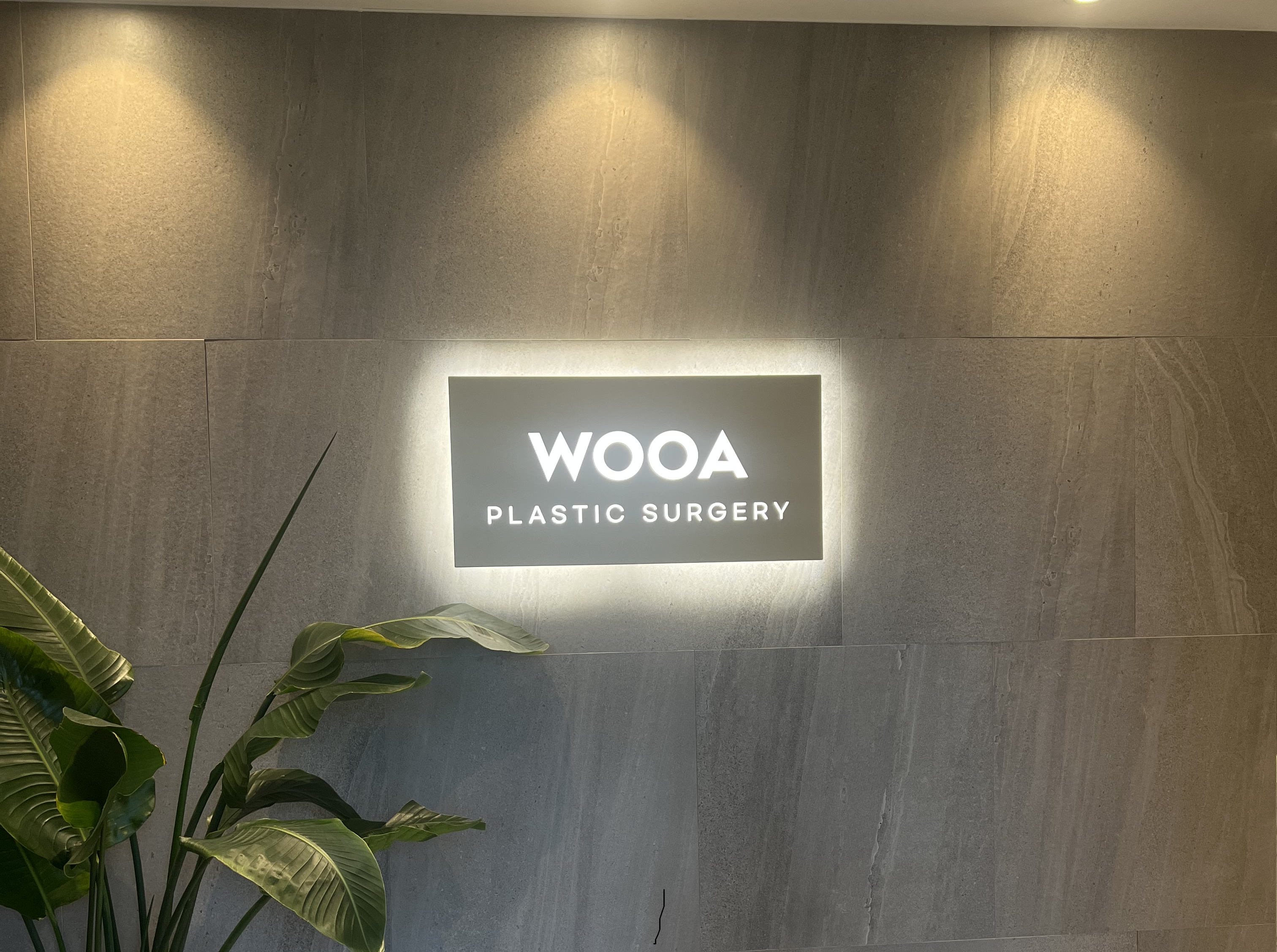
On May 19, 2026, I visited Wooa Plastic Surgery. I arrived at 9:00 AM, before the clinic opened, and met with Dr. Woojung Kim. Wooa is a plastic surgery and dermatology clinic led by Dr. Kim, a board-certified plastic surgeon widely known in Korea for breast surgery. His reputation for breast surgery is already familiar to many local Korean patients. During my visit, I was less focused on what is already known publicly and more focused on what I could see inside the clinic.
Because breast surgery often involves deep sedation or general anesthesia, I wanted to understand how the clinic prepares, monitors, and supports patients before and after surgery.
 Ultrasound on the left, the consultation room at Wooa
Ultrasound: Understanding the Breast Before Surgery
The first piece of equipment that caught my attention was an ultrasound machine in the consultation room. Plastic surgeons are not relying only on visual assessment or external appearance. For breast surgery, the surgeon needs to understand what is beneath the skin: breast tissue, implant space, possible fluid collection, and other findings that could affect surgical planning or follow-up care.
Ultrasound can help support that process. It can help evaluate breast tissue, screen for cysts or masses, assess implant-related concerns, and support follow-up care. It does not replace formal breast cancer screening or radiology-led diagnosis when needed, but it shows that the clinic is looking beyond shape and size.

X-ray and CT at Wooa
Pre-Surgery Screening: Blood Test, X-ray, and ECG
For major surgery, the patient should enter the operating room in a healthy and prepared condition. It is also the clinic’s responsibility to confirm that the patient is medically ready for surgery. At Wooa, I saw evidence of a pre-surgery screening setup that includes blood testing, X-ray, and ECG.
Blood testing can help check baseline health markers such as anemia, infection-related indicators, liver and kidney function, blood sugar, and clotting-related factors, depending on the panel. Wooa has also built a process for same-day blood test results. Chest X-ray and ECG can help identify certain lung, heart, or rhythm-related findings that may be relevant before anesthesia. None of these tests alone can guarantee safety. But together, they create a more structured picture of the patient’s baseline condition before surgery.
Anesthesia Safety Is a System
It is not realistic to evaluate every part of a clinic’s anesthesia system, but one of the most meaningful things a patient can check directly is whether the clinic has a dedicated anesthesiology specialist involved. Currently, Dr. Choi Chang-sik, Board-Certified in Anesthesiology and Pain Medicine, works at Wooa.
An anesthesiology specialist is not simply “the person who gives anesthesia.” They are responsible for preparing the necessary medications and equipment, monitoring vital signs, and responding together with the surgeon if the patient’s condition changes.
 Private recovery room with an oxygen mask visible on the left
Recovery Is Part of Safety
Wooa operates private rooms where patients can stay overnight and recover after surgery. I have seen patients who choose to return to a hotel on the day of surgery. Even when surgery goes well, bleeding, pain, dizziness, or swelling can feel alarming without a doctor or nurse nearby.
From Himedi’s perspective, recovery is not just a comfort issue. It is part of safety. After breast surgery, patients need time to recover from anesthesia and be observed for early concerns such as pain, nausea, bleeding, or oxygen level changes. For international patients, this matters even more. They are recovering in a foreign country, often without the same family or support system they would have at home.
Being able to recover inside the clinic, under appropriate medical protection, is an important part of responsible surgical care.
In the End, It Comes Down to People
If a Himedi patient has not yet chosen a plastic surgery clinic, we usually recommend that they review patient feedback, make a shortlist, and, if possible, take the time to visit the clinic and meet the doctor in person. Whether it is a health checkup center, dermatology clinic, or plastic surgery clinic, patient satisfaction and safety ultimately come down to people.
Dr. Woojung Kim recently published a book titled The Rule of 10,000 Breast Surgery Cases. One line stayed with me: he has taken responsibility for 10,000 breast surgery cases over 20 years.
That sense of responsibility is what first made me want to visit Wooa. When Himedi introduces a plastic surgery specialist to our patients, we look for doctors who have protected their reputation over many years by staying focused, taking responsibility for each patient, and maintaining pride in their surgical skill.
Recommended Reading
For patients preparing for plastic surgery, we also recommend this article from the American Society of Plastic Surgeons: Preparing for your plastic surgery procedure
About the Author
Donkyo Seo — Co-founder & CEO, Himedi
For the past 9 years, Donkyo has helped international patients navigate Korean healthcare. Himedi is licensed by Korea's Ministry of Health & Welfare (License #A-2016-01-01-2345).

Written by Himedi Inc.